
Survey & scope
Map hazards, reach routes, tasks, controls, interfaces and site constraints.
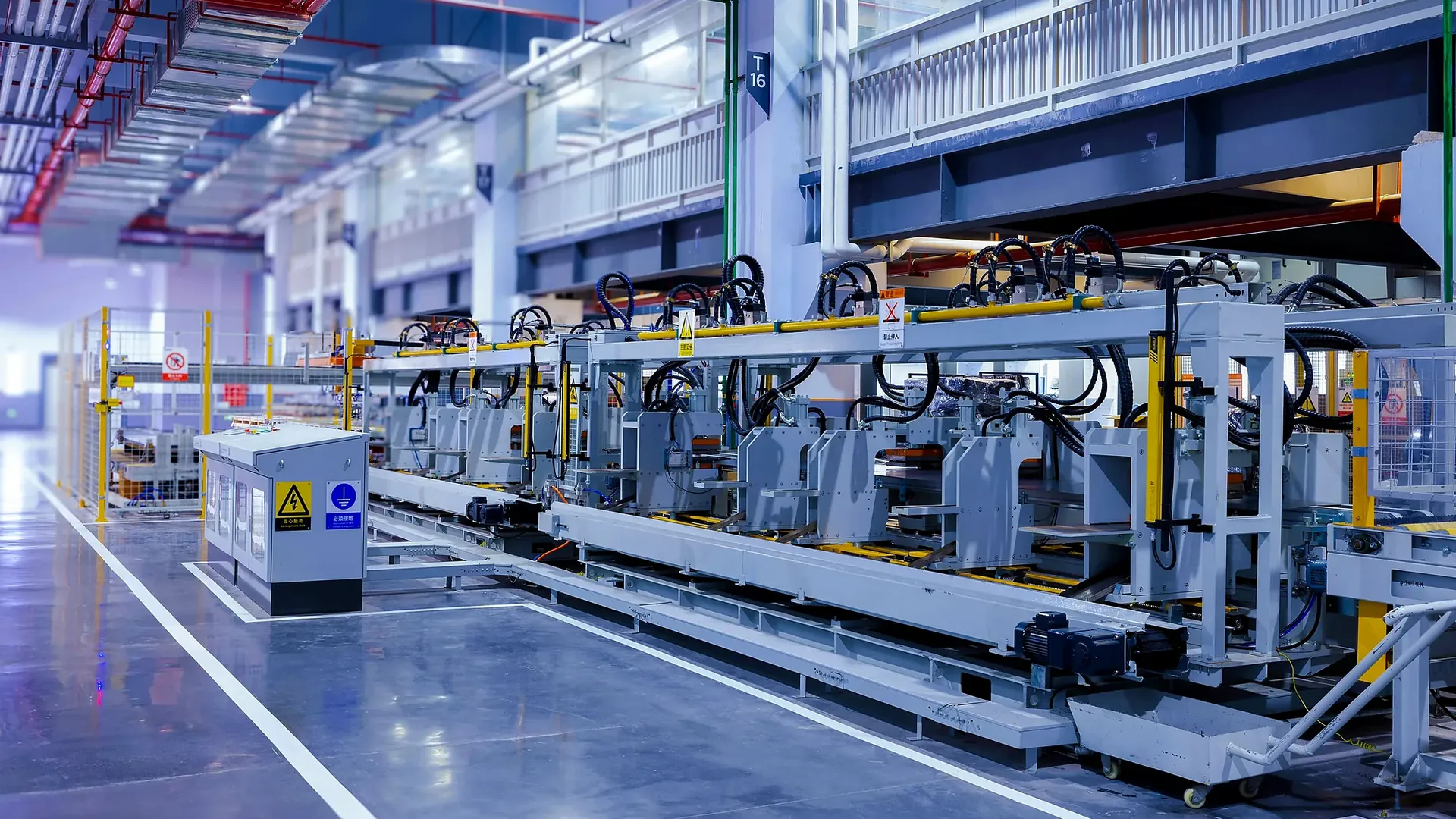
Bespoke safety guards for belt, roller and automated conveyors—from drive and nip-point protection to complete retrofit systems and interlocked access.
We develop complete conveyor guarding systems around the machine, product flow, operator task and required safe response—not a catalogue panel.
Speak to engineeringConveyor guarding is the physical and controlled-access protection used to prevent people reaching dangerous belts, rollers, drums, drives, nips and automated transfer mechanisms. Effective systems also provide a safe method for cleaning, jam clearance, inspection and maintenance. Read the complete buyer guide →
Conveyor risk rarely sits in one place. We follow the system from infeed to discharge and design every panel, opening and access point as part of one safeguarding concept.
Purpose-designed fixed and controlled-access guards for the rotating, drawing-in and entanglement hazards concentrated around conveyor drive stations.
Explore solution ↗ 02Guarding shaped around product flow at conveyor-to-conveyor and conveyor-to-machine interfaces, where changing geometry can create hidden trapping and drawing-in points.
Explore solution ↗ 03Fixed, removable and hinged underside guarding for elevated, open-frame and accessible conveyor sections where hazards can be reached from below.
Explore solution ↗ 04Engineered tunnels, infills and monitored transfer concepts that let products, cases or pallets pass through guarded boundaries without creating a person-access route.
Explore solution ↗ 05Movable conveyor guards and access points integrated with a defined safe stop, access, reset and restart sequence for regular production and maintenance tasks.
Explore solution ↗ 06A structured review of the complete conveyor route, its interfaces and the real intervention tasks that determine whether existing safeguards remain effective.
Plan an inspection ↗Different conveyor types create different access, product-flow and maintenance problems. These focused pages explain the likely hazards, design choices and information needed for an accurate project review.
Head and tail drums, return idlers, drives, skirting, tensioners and the complete belt return path.
Explore belt guarding ↗ 02Powered rollers, chain drives, pop-ups, stops, side access and conveyor-to-machine transfers.
Explore roller guarding ↗ 03Direct protection at in-running nips, drums, rollers, chains and changing-angle hazards.
Explore nip guards ↗ 04Upgrade missing, damaged or unsuitable guards around established and modified conveyor lines.
Plan a retrofit ↗ 05Carton, tote, parcel and pallet systems with frequent product openings and pedestrian interfaces.
Explore logistics guarding ↗ 06Guarding designed around hygiene zones, washdown, cleanability and daily access requirements.
Explore hygienic guarding ↗
Conveyor guarding must protect people during production, cleaning, tracking, tensioning, jam clearance and maintenance. We consider what happens before, during and after the guard is opened or removed.
Hazard Identify nips, entanglement, crushing, shearing and unexpected movement.
Access Trace every route over, under, through and around the proposed guard.
Task Build practical cleaning, recovery and maintenance into the arrangement.
Response Define stopping, isolation, reset and restart behaviour where access is controlled.
Responsibilities, interfaces and evidence are agreed early, so the guarding fits the conveyor and the way your team works.
Map hazards, reach routes, tasks, controls, interfaces and site constraints.
Develop guard geometry, materials, access strategy and safety-system interfaces.
Fabricate frames, panels, doors, infills and brackets to the agreed design.
Fit, integrate and check the solution, then provide the agreed project records.
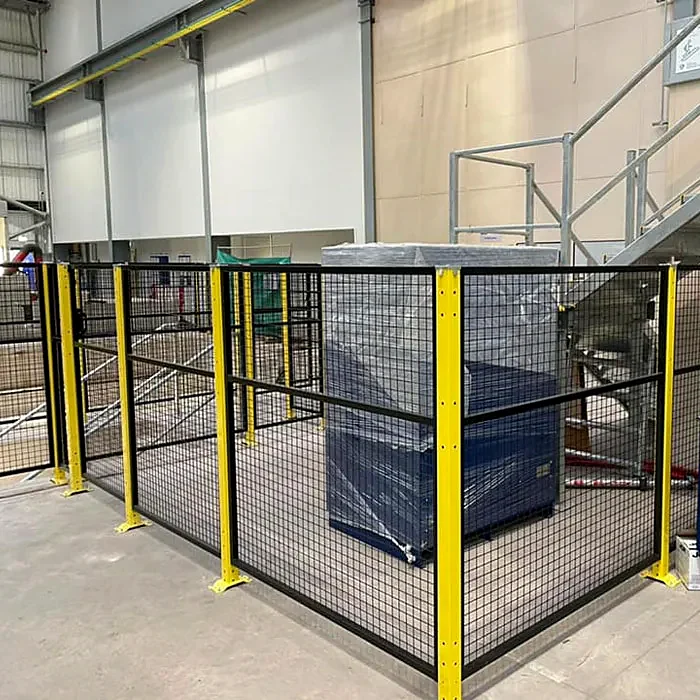
Visibility, aperture, stand-off distance, impact, hygiene, debris, ventilation, washdown and maintenance all influence the correct guard. We select the construction after the application is understood.
The applicable legal and technical framework depends on the machine, dutyholder, modification and project boundary. Our work can support PUWER risk reduction and relevant machinery-safety requirements.
Standards commonly considered may include BS EN ISO 12100, BS EN ISO 14120, BS EN ISO 13857, BS EN ISO 14119, BS EN ISO 14118 and the relevant safety-control standard. The machine-specific assessment determines what applies.
Product, hygiene, throughput, traffic, operator interaction and shutdown access all change the right solution.
Understand common hazard points, fixed versus interlocked access, retrofit planning, cost drivers, PUWER considerations and the information that helps us quote accurately.
General guidance helps frame the project; the machine-specific assessment controls the final design.
Typical areas include head and tail drums, drive chains, sprockets, couplings, powered rollers, transfer points, tensioners, return paths, accessible undersides and product or access openings. The final scope must follow the specific machine and every foreseeable reach route.
Yes. Existing conveyors can often receive new fixed panels, infills, underside guards, tunnels and controlled access. A survey confirms available fixing points, interfaces, maintenance tasks and any control-system work.
Yes. Oxford Machine Guarding can provide a complete project from survey and concept through detailed design, manufacture, installation, safety integration, testing and handover, with the agreed boundary stated clearly.
Yes. Where access is infrequent, tool-removable panels may be appropriate. Frequent access may require hinged or removable interlocked guards, depending on risk, stopping time and the task.
No. Emergency-stop devices are supplementary measures and do not prevent access to moving parts. Fixed or controlled-access guarding is considered first, alongside safe isolation and intervention methods.
Send photographs, a layout or a short description. We can help define whether the next step is a desktop review, site survey, repair or complete guarding project.
A conveyor guarding survey is more useful when it records the tasks people perform around the equipment. Mark where operators clear a fallen pack, where maintenance staff track the belt, and where cleaners need access beneath the return path. Include adjacent walkways, platforms and transfer points. The same drive can present different reach routes when a person stands above it or approaches from the neighbouring machine.
Describe how often each access point is used and what can continue moving after a stop command. Fixed panels, removable sections and interlocked access need to be considered with the actual task and stopping behaviour. Cleaning or maintenance also needs a suitable isolation method. HSE guidance on conveyors highlights the danger of reaching or using tools near accessible nips; panel layout alone does not resolve that intervention.
Send Oxford Machine Guarding a marked layout, photographs taken from safe positions and the available shutdown window. Ask the proposed scope to identify access provisions, fixings, control interfaces and the checks required at handover. Where the conveyor reverses, or new equipment alters a transfer, include both operating conditions so the engineering review covers the changed hazards.
Include both directions in the assessment. Reversal can change which side of a roller or drum forms an in-running nip, so a guard arrangement must be assessed for the intended operating modes.
Provide safe overall photographs, conveyor height, nearby access routes and the cleaning or maintenance tasks performed underneath. Include a layout where platforms or adjacent equipment change how hazards can be reached.
Map drives, nip points, transfers and the places people reach across or beneath the conveyor. Include cleaning, jam clearance and maintenance tasks in the review. Record changes in conveyor height and neighbouring equipment so that guards, access points and the restart procedure can be assessed as one installation.
Related guidance: Warehouse conveyors · Underside guarding